
Every minute a trailer sits at your dock is a minute of lost velocity for the entire supply chain. A truck unloading conveyor converts that idle time into motion—moving cartons, parcels, totes, and irregulars from trailer to sortation with less labor, fewer touches, and better safety. From express parcel hubs and 3PLs to cross-border logistics and manufacturing, operations that handle loose-loaded trailers are turning to extendable, mobile, and flexible conveyor designs to boost throughput. Well-chosen equipment does more than move boxes; it optimizes ergonomics, reduces damage, and synchronizes with upstream and downstream automation to keep product flowing smoothly through the building.
Today’s solutions combine intelligent controls with rugged mechanical designs that stand up to continuous-duty cycles. Whether you need to tame peak-season surges, stabilize dock KPIs, or standardize processes across multiple facilities, a modern conveyor at the truck interface is one of the highest-impact investments available. By reducing walk distances, minimizing manual lifts, and streamlining the handoff to sorters or palletizing cells, an unloading conveyor directly impacts receiving capacity, labor allocation, and service-level commitments.
How a Truck Unloading Conveyor Works: Core Designs and Components
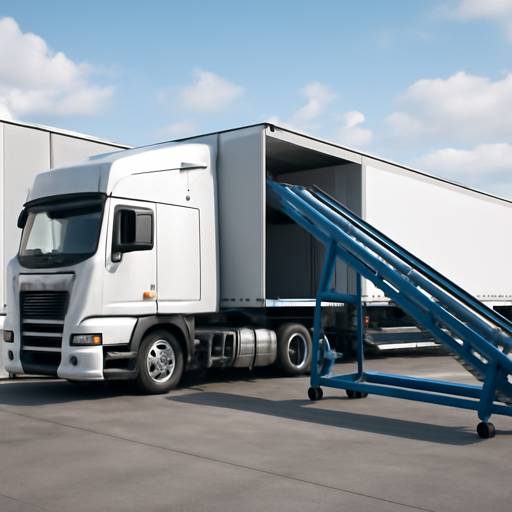
A truck unloading conveyor is engineered to bridge the gap between the building’s material flow and the trailer’s interior. The most recognizable design is the telescopic belt conveyor: a series of nested steel booms that extend deep into the truck. As the booms telescope, a powered belt at the nose carries goods out of the trailer and onto downstream equipment. Variable-speed drives (VSDs) let operators match belt speed to carton characteristics and crew pace, protecting both product and people.
Mobile conveyors with powered roller or belt top surfaces are common in operations that must serve multiple doors or handle a wide mix of packaging. These units often include adjustable heights, flip-up or articulating noses for better ergonomics at the trailer floor, and heavy-duty castors with locking brakes for safe positioning. For lighter-duty or highly cost-sensitive applications, gravity roller extensions or flexible skatewheel sections provide simple flow assist, though powered solutions deliver better control and higher throughput for most parcel and e-commerce profiles.
Key mechanical features matter in round-the-clock environments. Reinforced frames resist torsion when fully extended, while robust rollers, quality bearings, and industrial-grade belts (such as PVK or rough-top) handle a mix of corrugated and polybags without slippage. Side guides and impact plates help manage irregular items and reduce edge damage. For facilities that confront tight turning radii at the dock, segmented booms with pivot capability allow operators to “steer” the conveyor nose around obstacles or align with stacked parcels along the trailer wall.
Equally important are safety and controls. Standard features typically include mushroom emergency-stop buttons at the operator end and at the belt nose, audible-visual alerts when extending or retracting, and protective guarding around pinch points. Many systems add a soft-touch belly bar for immediate stop, anti-collision sensors to prevent impact with trailer walls, and auto-stop photoeyes that halt the belt when no product is present—saving energy and belt life. Integration with facility systems is straightforward: conveyor PLCs communicate with warehouse control systems (WCS) and can exchange signals with sorters, scanners, and dimensioning equipment, enabling rate-based flow and preventing downstream backups. Energy-efficient motors, soft start/stop profiles, and auto-sleep modes further reduce operating costs while keeping noise and wear to a minimum.
Selecting the Right Conveyor for Your Dock: Key Criteria and Sizing
Choosing the optimal configuration starts with understanding your product mix and required rates. Define average and peak throughput in units per hour (UPH/PPH), the parcel size range, and minimum/maximum weights. Fragile items, polybags, and irregulars demand controlled acceleration and well-selected belt surfaces. Heavy cartons benefit from higher-friction belts and reinforced chassis. If your dock handles both floor-loaded containers and palletized freight, consider a modular layout that pairs a telescopic unit for loose loads with a powered takeaway belt that hands off to pallet build zones or automated sortation.
Trailer length and dock geometry drive stroke length and boom count. Standard 40–53 ft trailers often require two to four telescopic stages to reach the back wall. Ensure sufficient vertical adjustability to meet varying trailer heights and to keep the working zone in the best ergonomic band—reducing operator strain and musculoskeletal risk. Think carefully about aisle space: mobile units need room to maneuver, and the base section should not obstruct adjacent doors. For pop-up sites, peak-season annexes, or cross-border lanes with frequent layout changes, flexible powered roller sections add real agility, curving through tight spaces while maintaining accumulation control.
Controls sophistication should match your operation. Facilities feeding a dynamic sortation system value conveyor logic that meters flow automatically based on downstream availability—limiting recirculation and jams. Simple HMIs with multilingual interfaces streamline training in diverse labor markets. Where compliance is strict, verify conformity with applicable safety codes and ensure sufficient e-stop coverage, warning signage, and lighting at the point of operation.
Total cost of ownership (TCO) extends beyond purchase price. Consider spare parts availability, access to wear components, preventive maintenance intervals, and remote diagnostics. Ruggedized builds reduce unplanned downtime; sealed bearings and IP-rated enclosures resist dust and humidity. If your dock environment includes outdoor exposure or temperature swings, specify materials and drives accordingly. Energy efficiency also matters in high-duty docks; look for auto-idle logic and regenerative braking on high-inertia lines to trim utility bills.
To match your goals—whether maximizing UPH in a parcel hub or stabilizing unloading crews in a general warehouse—explore the truck unloading conveyor options that align with your throughput, footprint, and budget. A well-fitted system delivers quick wins: shorter dwell times, more consistent rates across shifts, and a safer, more ergonomic workplace.
Deployment, Safety, and ROI: Real-World Scenarios from Express and Cross-Border Logistics
Implementation starts long before installation day. Map current-state dock processes: average unload times per trailer, walking distance inside vehicles, double-handling incidents, and congestion at takeaway points. This baseline makes ROI visible later. Next, simulate flow with realistic package profiles. In express parcel operations, loose-loaded trailers can exceed thousands of pieces per hour at peak; achieving that requires balanced conveyor speed, adequate operator stations, and reliable accumulation on downstream belts. In cross-border facilities where product types vary by lane, assign standard settings and SOPs for each profile to keep rates stable.
Training is central to both performance and safety. Operators should practice extending/retracting booms smoothly, maintaining safe standoff from trailer walls, and positioning the nose near the work zone rather than dragging parcels. Reinforce lockout/tagout steps for maintenance, belt tracking checks, and daily inspections of guards and emergency stops. Many sites pair a dock lead with a new crew to coach on tempo: set belt speed to match ergonomic lifts, not the other way around. This reduces fatigue and maintains quality while still improving unload times.
In a high-volume e-commerce node serving regional last-mile networks, adding two telescopic units across four doors cut unload time per 53 ft trailer by more than 35%. The operation standardized heights and nose positions, introduced pre-shift equipment checks, and integrated the conveyor PLCs with a dimensioning/scanning line. Bottlenecks disappeared at the door, and carton damage fell due to fewer manual tosses. Payback arrived in under a year, helped by reduced overtime and redeployment of associates to value-adding tasks upstream.
Another example comes from a coastal cross-border facility handling mixed parcels and small industrial goods. Seasonal surges caused long lines of waiting trucks. Deploying a rugged, extendable belt conveyor with a powered takeaway and a short flexible powered section at the elbow enabled the dock to swallow irregulars without stoppages. Auto-sleep functions idled sections with no product, trimming power costs. Supervisors tracked KPIs—dock-to-stock time, PPH per door, and injury rates—on a simple HMI, while maintenance used remote diagnostics to adjust belt speeds and monitor motor temperatures during peak humidity. The result: steadier flow, faster customs handoffs, and fewer delays at the yard gate.
Safety features earn their keep in busy docks. A layered approach typically includes e-stops at both ends, a belly bar at the nose, audible/visual motion alerts, anti-collision sensing during extension, and clearly marked walk zones. Good lighting inside trailers, anti-slip surfaces at the nose, and training on proper carton handling further reduce risk. In many jurisdictions, routine inspections and documentation are required; aligning maintenance calendars with safety audits helps ensure compliance while maintaining uptime.
Finally, consider scalability. If your growth plan includes adding doors or opening satellite sites, choose modular equipment that can be redeployed, extended with extra boom sections, or paired with additional mobile takeaways. Standardize controls and spare parts across sites to simplify training and inventory. For operations that serve both domestic and international lanes, bilingual HMIs and common SOPs help crews move between doors without loss of productivity. With the right choices, a truck unloading conveyor becomes more than a machine at the dock—it becomes a repeatable, safe, and cost-efficient process that scales with demand, season after season.

Bronx-born, Buenos Aires-based multimedia artist. Roxanne blends spoken-word poetry with reviews of biotech breakthroughs, NFT deep-dives, and feminist film critiques. She believes curiosity is a universal dialect and carries a portable mic for impromptu interviews.
