
about : Upload
Drag and drop your PDF or image, or select it manually from your device via the dashboard. You can also connect to our API or document processing pipeline through Dropbox, Google Drive, Amazon S3, or Microsoft OneDrive.
Verify in Seconds
Our system instantly analyzes the document using advanced AI to detect fraud. It examines metadata, text structure, embedded signatures, and potential manipulation.
Get Results
Receive a detailed report on the document's authenticity—directly in the dashboard or via webhook. See exactly what was checked and why, with full transparency.
How to Recognize Common Signs of a Fake Receipt
A practical first step in learning to detect fake receipt documents is to focus on the visible, physical, and typographical clues that most fraudsters overlook. Start by examining the layout and formatting: legitimate receipts from established vendors tend to follow consistent templates with aligned columns, uniform spacing, and standard fonts. If a receipt shows inconsistent font sizes, uneven margins, or misaligned numbers in the totals column, those are red flags. Check the vendor header—logos should be crisp, not pixelated. Many forged receipts are scanned or edited images; blurry or distorted logos often indicate manipulation.
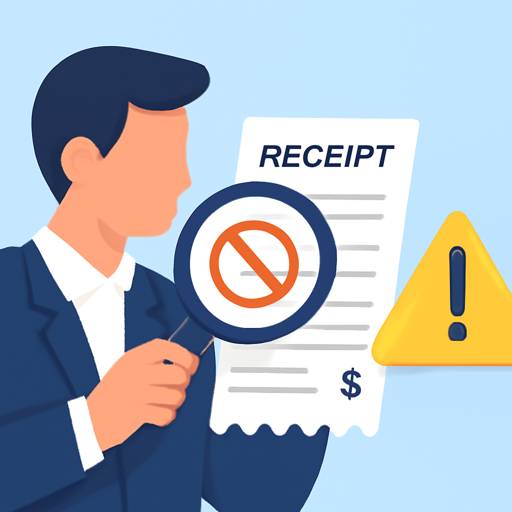
Next, scrutinize the numerical data. Look for improbable or rounded totals, repeated item descriptions with identical prices, or illogical tax calculations. Cross-check subtotal, tax rate, and total using simple arithmetic: mistakes here are surprisingly common in fabricated documents. Examine dates and timestamps—fraudsters sometimes use unrealistic purchase times (e.g., 3:00 AM for in-store transactions) or future dates. Also verify payment method details; inconsistent last-four digits or conflicting authorization codes suggest tampering.
Physical cues matter too. For printed receipts, check paper quality and printing artifacts. Thermal receipts produced by point-of-sale printers will have faint, heat-sensitive ink that fades with time—if a receipt printed on thermal paper looks unusually crisp in one area and faded in another, it may have been spliced from multiple sources. If the receipt is a PDF, zoom in and inspect for layered content: text that doesn’t scale smoothly or contains different rendering vectors points to pasted or reconstructed elements. These straightforward checks can often reveal a fake before you escalate to advanced verification.
Advanced Verification Techniques: Metadata, OCR, and AI
When a visual inspection isn’t enough, apply technical methods to uncover deeper manipulation. One of the most powerful tools is metadata analysis: embedded file metadata in PDFs or images can reveal creation dates, editing software, and author fields that contradict the visible content. For example, a receipt that claims to be issued yesterday but has a creation timestamp weeks earlier—or shows it was last edited with a photo editor—warrants suspicion. Extracting and reading metadata is a quick way to flag inconsistencies without altering the file.
Optical Character Recognition (OCR) combined with structural parsing helps validate receipt integrity at scale. OCR converts images into searchable text and allows automated systems to compare recognized fields—merchant name, address, line items, totals—against expected formats and known vendor templates. Using rule-based checks, OCR can detect impossible item codes, mismatched currency symbols, or subtotal/total mismatches. When layered with AI-powered anomaly detection, these systems identify subtle deviations from a vendor’s normal pattern, such as unusual item descriptions or pricing errors that humans might miss.
AI also excels at spotting tampered signatures, cloned logos, and recomposed documents. Machine learning models trained on authentic and fraudulent receipts can highlight pixel-level inconsistencies, repeated patterns suggesting copy-paste edits, or unnatural compression artifacts. For organizations needing seamless verification, integrations that allow users to upload files and get instant analysis—either via a dashboard or webhook—make it simple to incorporate checks into workflows. If you need an accessible tool that automates these methods and helps you detect fake receipt documents rapidly, look for services offering both visual and metadata-level transparency in their reports.
Real-World Examples and Use Cases: How Detection Prevents Loss
Understanding how fake receipts are used in real scenarios highlights why robust detection matters. In expense fraud, employees may submit altered receipts to claim higher reimbursements. Fraudsters often manipulate the total or add phantom line items. In one corporate case, an accounts-payable team discovered patterned alterations: receipts all contained the same subtle JPEG artifact indicating they had been re-saved through the same image editor. Cross-referencing metadata revealed a single external email address as the common source.
E-commerce sellers face a different scheme where buyers dispute transactions using fabricated digital receipts to claim refunds. In these disputes, verification that includes IP address logs, original transaction IDs, and matching vendor confirmation emails can prove authenticity. Insurance claims are another major target: claimants sometimes attach doctored receipts to inflate repair costs. A thorough check that examines timestamps, vendor consistency, and payment authorization codes can disprove exaggerated claims quickly, saving insurers substantial payouts.
Small businesses and freelancers also suffer when scammers submit falsified receipts to evade taxes or misrepresent expenses. Implementing a simple policy—require original electronic receipts, perform metadata checks for PDFs, and use OCR to validate fields—can deter most attempts. Case studies show that combining human review with automated AI detection reduces false positives while catching sophisticated forgeries. Training staff to recognize common manipulation patterns alongside deploying technical tools creates a layered defense that significantly lowers the risk of financial loss and reputational damage.

Bronx-born, Buenos Aires-based multimedia artist. Roxanne blends spoken-word poetry with reviews of biotech breakthroughs, NFT deep-dives, and feminist film critiques. She believes curiosity is a universal dialect and carries a portable mic for impromptu interviews.
